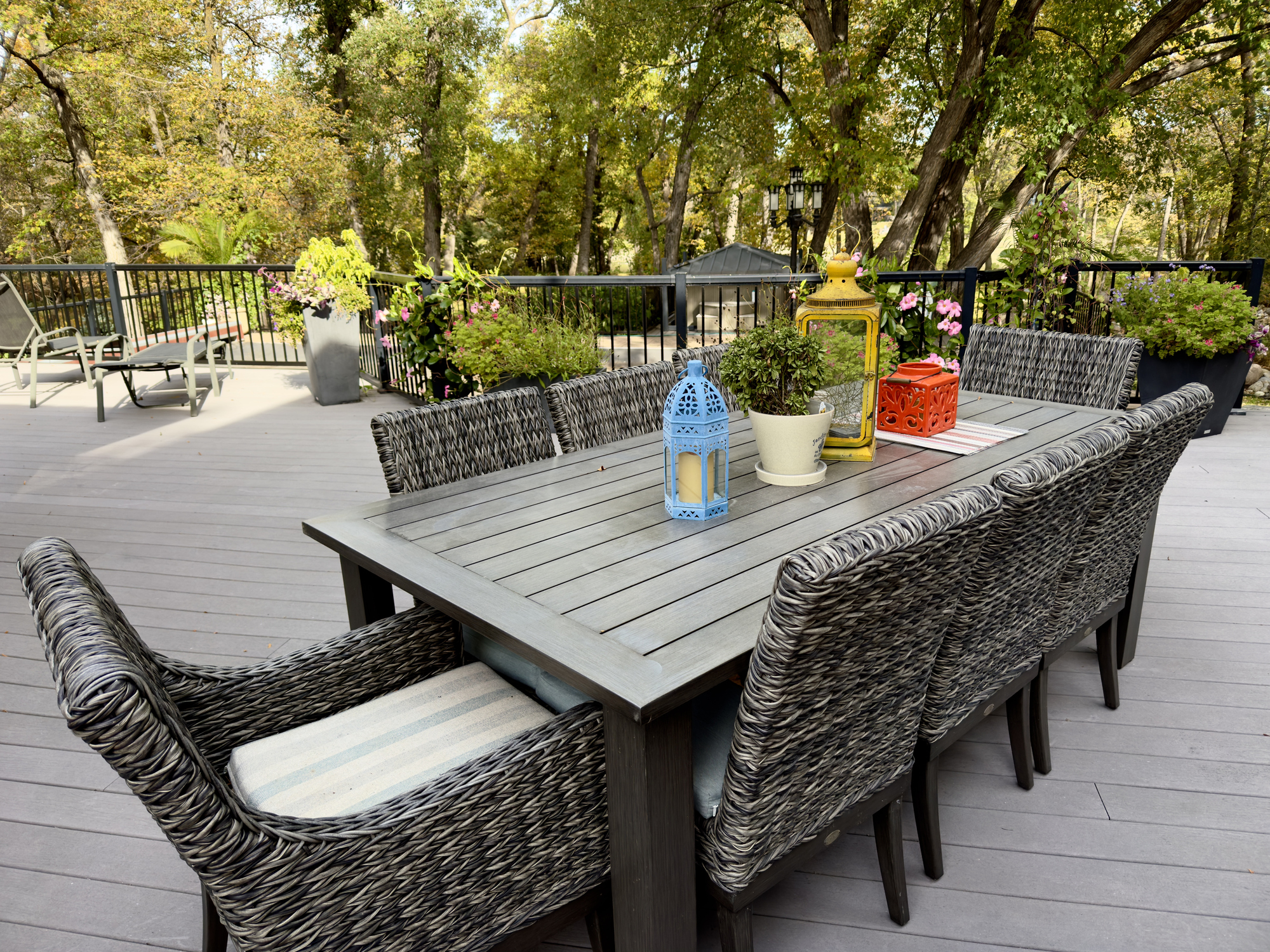
A fall deck inspection checklist should cover five areas: decking boards, railings, stairs, the ledger board, and the footings. Most decks look fine from a distance. Rot, rust, or a failing ledger connection can hide underneath a clean surface. Working through a fall deck inspection checklist before the snow flies helps Canadian homeowners catch small problems early. At this stage, repairs are still inexpensive. If a deck shows soft boards, wobbly railings, or gaps at the house connection, cleaning will not fix the problem. A licensed contractor can confirm whether the issue is cosmetic or structural.
Every September, homeowners across Canada pressure wash their decks and apply a fresh coat of stain. Many consider the job done for the season. However, a freshly cleaned deck can still hide serious problems underneath. Freeze thaw cycles are hard on wood, fasteners, and footings. As a result, fall is the ideal time to look past the surface before winter arrives.
This guide walks through a fall deck inspection checklist for the entire structure. It explains which warning signs mean a deck needs more than a cleaning. It also covers when to call in a Baeumler Approved contractor instead of tackling repairs alone.
What a Fall Deck Inspection Checklist Should Cover
A useful fall deck inspection checklist starts at the ground and works upward. Most structural failures begin out of sight. Therefore, before checking the deck surface, spend a few extra minutes underneath with a flashlight.
Decking Boards: Deck Inspection Signs to Check
Walk the entire deck surface. Press down near board edges, seams, and anywhere water tends to pool. Soft, spongy spots indicate rot underneath the finish, even if the top still looks fine. For material specific guidance, see our 9 Essential Deck Renovation Hacks. This guide covers longer lasting decking materials for a rebuild.
Railings, Guards and Stairs: Deck Inspection Signs
Push firmly against every section of railing. A properly anchored guard should not move under a person’s weight. Loose balusters, wobbly posts, or shifting handrails signal a deck repair need, not a simple touch up. Stairs deserve the same attention. Shifting stringers or gaps between treads are early signs of settling or rot.
Ledger Board and Footings: Structural Deck Inspection Signs
The ledger board connects the deck to the house. It carries a large share of the load in most deck designs. Look for gaps between the ledger and the siding, rust streaks, or soft wood around the bolts. Homeowners should treat any separation at this connection point as urgent. It is one of the leading causes of deck collapse across North America.
Footings and support posts also deserve a look. Check for visible cracking or heaving. Confirm that posts still sit securely on their footings after a full season of use. If a deck sits close to grade, or is more than fifteen years old, a closer look is worth it. The Canadian Wood Council’s residential deck span guide offers reference tables for joist and beam sizing. A contractor can use these tables to confirm the structure still meets current standards.
Signs Your Deck Needs More Than a Cleaning
A pressure wash and a fresh coat of stain address appearance, not structure. Graying wood, mild surface mildew, or light dirt buildup are cosmetic issues. Cleaning solves these problems well. However, certain signs point to problems that cleaning cannot fix:
- Soft or spongy decking boards, especially near the house or around planters
- Rust colored stains bleeding from fasteners or metal connectors
- Visible gaps or separation between the ledger board and the house
- Railings, posts, or stairs that move noticeably when pushed
- Standing water or consistent dampness underneath the deck
- Insect activity, including small holes or sawdust like debris near framing
If any of these signs are present, a fall deck inspection checklist should move from a DIY walkthrough to a professional assessment. In many municipalities, structural deck repairs and rebuilds also require a building permit. It is worth confirming requirements before work begins. The Government of Ontario’s guide to building permits explains when a permit applies. It also outlines what homeowners can expect from the municipal review process.
Cost Considerations for Deck Repairs
Deck repair costs vary widely depending on scope. Replacing a few decking boards or resealing a railing is a modest expense. This often costs a few hundred dollars in materials and labour. Ledger board replacement, footing repair, or a full structural rebuild is a different scale of project. Our Summer Home Renovation Budget guide outlines realistic cost ranges for deck and patio additions across Canada.
As a result, homeowners should budget a contingency of 15 to 20 percent above any initial quote. Older decks especially tend to reveal additional issues once work uncovers the boards or framing. That buffer keeps a project from stalling partway through.
How to Choose the Right Contractor for Deck Repairs
Not every contractor who advertises deck work carries the licensing and insurance needed for structural repairs. Homeowners should confirm liability insurance and check for a valid business licence. Ask for recent references and request a written contract before any work begins.
A contractor who understands local building codes will know when the project needs a permit. A good contractor will also manage that process, rather than leaving it to the homeowner. For a deeper look at planning timelines, see our guide on how to plan renovations before the busy season hits.
Deck Repair Questions to Ask Before Hiring a Contractor
- Are you licensed and insured for structural deck work in this municipality?
- Will you pull the required building permit, and who is responsible if it is missed?
- Can you provide references from similar deck repair or rebuild projects?
- What warranty do you offer on labour and materials?
- How will you communicate and price unexpected issues, such as hidden rot?
Deck Repair Red Flags to Watch For
Be cautious of contractors who quote a full structural repair without inspecting underneath the deck. Also watch for contractors who cannot provide proof of insurance, or who pressure for full payment before work starts. These are common mistakes that lead to unpermitted, uninsured work. Unpermitted work can affect a home’s resale value and insurance coverage later.
Why a Fall Deck Inspection Checklist Beats a Spring Scramble
Contractors who specialize in structural repairs book up quickly once spring arrives. Every homeowner wants outdoor projects finished before summer. Completing a fall deck inspection checklist now means repairs can often happen during a slower season. Scheduling early often costs less and finishes before another Canadian winter adds further strain.
The Baeumler Approved Difference
Every contractor in the Baeumler Approved network has passed a vetting process. That process includes background checks, licensing confirmation, and insurance verification. Homeowners working through a fall deck inspection checklist can move straight from spotting a problem to hiring a qualified professional. There is no need to spend weeks researching credentials alone.
Find a Baeumler Approved Contractor
Frequently Asked Questions
How often should I inspect my deck?
Most decks benefit from a full inspection once a year. Fall, before winter weather sets in, is the ideal time. Add a lighter visual check in spring.
What is the most common cause of deck collapse?
Separation at the ledger board, where the deck attaches to the house, is one of the leading causes of deck failure in North America.
Can I inspect my own deck, or do I need a professional?
Homeowners can complete a basic visual and physical check themselves. A licensed professional should confirm any structural concern, including soft framing or ledger separation.
Do I need a permit to repair my deck?
It depends on the scope of work and the municipality. Structural repairs, rebuilds, and footing work typically require a permit. Minor board replacement usually does not.
How much does deck repair cost in Canada?
Minor repairs can cost a few hundred dollars. Structural rebuilds involving the ledger board or footings can run several thousand dollars, depending on size and material.
Is composite decking more durable than wood?
Composite decking generally requires less maintenance and resists rot better than wood. However, the underlying structural framing is typically still wood, and that framing still needs periodic inspection.
Get Matched With a Vetted Deck Contractor
Good People. Good Work. ✅