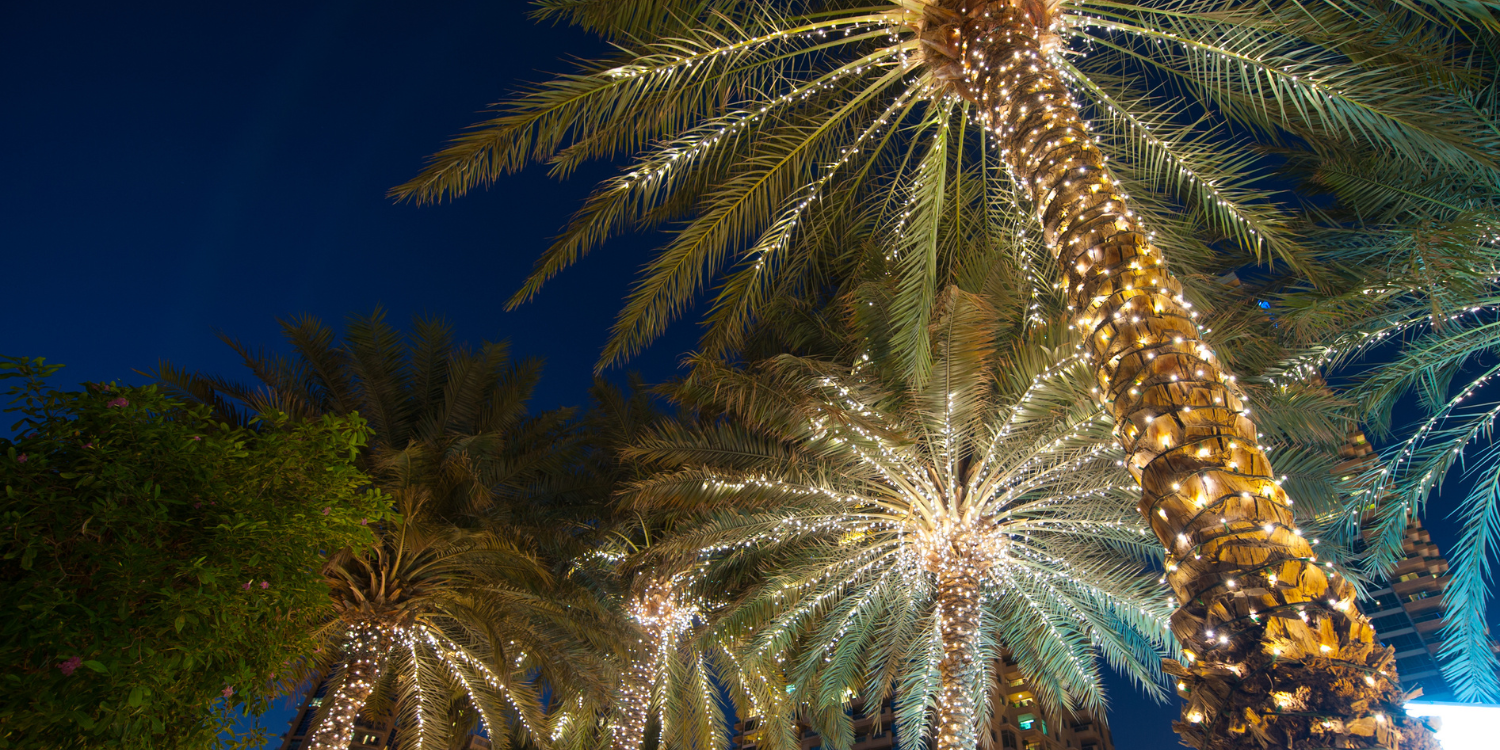
Yes, they can. In Vancouver of course but did you know they can grow in Southern Ontario? In fact at our location in Brantford, Ontario we have a few different varieties that will withstand Canada’s Winter.
With a little help there’s no need to shy away from these ever popular exotic plants.
One of the first questions people ask about a certain palm is its cold hardiness or cold tolerance (both mean the same thing). This refers to the minimum temperature that a palm can withstand before it begins to freeze to death. Different types of palms come from different parts of the world. Some come from tropical rainforests while some come from hot, dry deserts. A palm’s natural habitat is where it has been growing since the beginning of time (in most cases). Thus, the palm has become accustomed to the climate, conditions, and environment around it. If a palm is subjected to colder or drier conditions than it is used to in its native home, it can suffer damage or even death.
TEMPERATURE
Simply put, a palm has a temperature and humidity range in which it is able to photosynthesize and grow. If the temperature falls below this range, the cells in the palm’s leaves (chlorophyll) stop photosynthesizing and begin to die. The leaves will be the first to go, followed by the stems, crown, and lastly the main trunk. Some palms have been chilled long enough to lose all their leaves (defoliate) but not long enough to freeze the grow point (crown). In this case, the palm will usually recover by pushing new growth once temps become warmer. Full recovery can take years.
DURATION OF WARMTH
More important than duration of cold is the duration of warmth. The duration of warmth has to do with the climate in a certain area. (Don’t confuse weather with climate. Weather refers to the current conditions in a particular area. Climate refers to the meteorological conditions, including temperature, precipitation, and wind, that characteristically prevail in a particular region). We will use the CoconutPalm (Cocos nucifera) as an example in this case. The Coconut Palm is generally known as a Zone 11 plant (cold hardy to 40 degrees F). If the temperature falls below 40 degrees, the palm begins to halt photosynthesis (as explained above). Coconut Palms grow well in Southwest Florida, which is considered a sub-tropical climate. The average annual temperature in SW Florida is 72.5 degrees F.
Now lets take a look at coastal Southern California, which is considered a Mediterranean climate, where a few collectors are successfully growing Coconut Palms outdoors.
XLB Palm Trees, Ontario’s palm tree specialist, provides businesses and home owners throughout Ontario with the opportunity to create custom tropical designs into their landscaping portfolio. To enhance your outdoor lifestyle with unique spaces, XLB Palm Trees offers tropical and cold hardy tropical plants and palms. From backyard oasis, cottages or private events to restaurants and custom projects, XLB Palm Trees offer the highest quality plants.
XLB Palm Trees hand selects the inventory from our own supply in Vero Beach, Florida. Every palm and tropical plant is shipped and packaged with care, arriving in Ontario in a matter of days, guaranteeing the highest quality product to you. Contact us for more details and what cold hardy palms we have available.