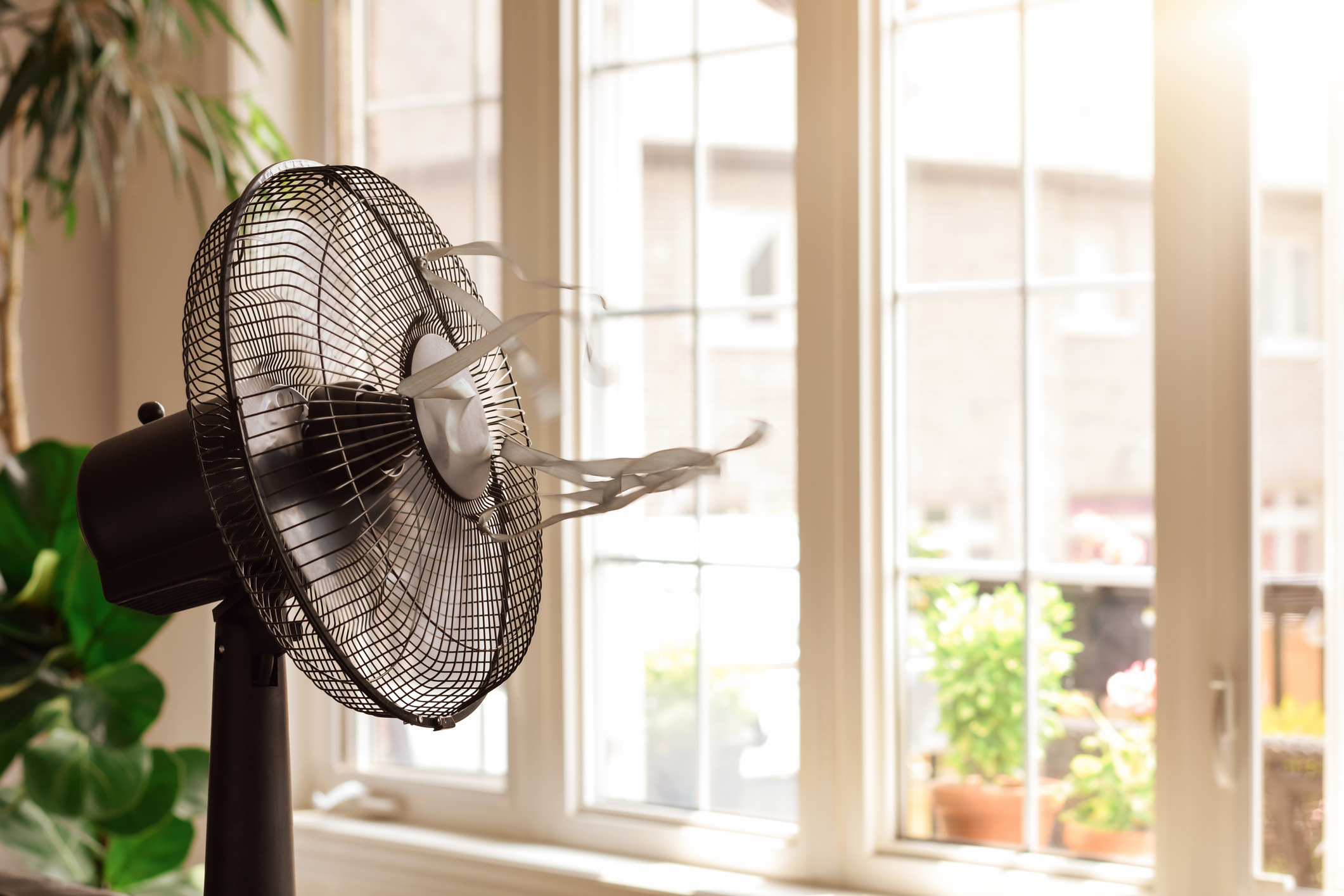
The most effective ways to cool your home without AC are attic ventilation, exterior window shading, strategic window coverings, and ceiling fans working together as a system. Canadian homeowners who layer these four strategies can reduce indoor temperatures by 3 to 6 degrees Celsius without running the air conditioner. The right contractor makes the difference between an upgrade that actually performs and one that looks good on paper.
Why Your Home Heats Up Faster Than It Should
Most Canadian homes were built for winter performance. Insulation, window specs, and roof assemblies were all optimized to keep heat in — which means they are often poorly equipped to keep summer heat out. When temperatures climb, heat enters through three main pathways: the attic, the windows, and unshaded exterior walls.
Understanding those entry points is the foundation of any plan to cool your home without AC. Addressing even one of them with the right upgrade reduces the load on your air conditioner — or eliminates the need to run it at all during moderate heat. If you are planning these upgrades alongside other summer projects, the Baeumler Approved guide to summer renovation budgeting covers how to sequence and cost out multiple trades in a single season.
Attic Ventilation: The Most Effective Way to Cool Your Home Without AC
Why the Attic Is Your Biggest Problem in Summer
On a hot day, an unventilated attic can reach 60 degrees Celsius or higher. That heat radiates directly through your ceiling into every room below. No amount of ceiling fan use or window covering will fully compensate for a poorly ventilated attic baking above your living space all afternoon.
Proper attic ventilation creates a continuous airflow path — drawing cooler outside air in through soffit vents and exhausting superheated air out through ridge vents or powered attic fans. According to Natural Resources Canada, reducing heat buildup at the source is the most cost-effective approach to managing indoor summer temperatures.
What a Qualified Insulation Contractor Should Assess
Attic ventilation is not a DIY project. Improperly balanced intake and exhaust can draw conditioned air out of your living space, making your home hotter and your energy bill higher. A licensed insulation or HVAC contractor will assess your current soffit-to-ridge ratio, identify blocked venting, and determine whether passive or powered ventilation is appropriate for your roof type.
- Soffit vent condition and clearance from insulation
- Ridge vent continuity across the roofline
- Powered attic fan sizing relative to attic square footage
- Insulation depth and whether it is blocking intake airflow
If your home also has insulation below current building code minimums, a combined insulation and ventilation upgrade addresses both summer heat gain and winter heat loss in a single project. Our article on year-round indoor comfort upgrades covers how these two systems work together.
Find a Baeumler Approved Insulation or HVAC Contractor
Ceiling Fans: A Low-Cost Way to Cool Your Home Without AC
How Ceiling Fans Actually Work in Summer
Ceiling fans do not lower air temperature — they lower perceived temperature through the wind chill effect. Set to counter-clockwise rotation in summer, a ceiling fan pushes air straight down and creates a breeze that makes a room feel up to 4 degrees cooler. That difference lets you raise your thermostat setpoint without noticing any change in comfort.
The important rule: ceiling fans only work when someone is in the room. Running them in empty rooms wastes electricity. Turn them off when you leave.
When a Licensed Electrician Is Required for Fan Installation
Many older Canadian homes have ceiling boxes rated for light fixtures only — not for the dynamic load of a ceiling fan motor. Installing a fan on an under-rated box is a safety and code issue, not just an inconvenience. Before mounting any ceiling fan, confirm the electrical box is fan-rated. If it is not, a licensed electrician must replace it before installation proceeds. Our home systems maintenance guide outlines what to expect from a professional residential electrical assessment.
Window Coverings: Block Heat Before It Enters the Room
The Right Covering for Each Exposure
Interior window coverings are one of the simplest ways to cool your home without AC — but not all coverings perform equally. Heavy blackout curtains and cellular (honeycomb) shades outperform standard blinds on south- and west-facing windows, where afternoon sun is most intense. Cellular shades trap an insulating air pocket between the glass and the room, slowing heat transfer in both directions.
- South-facing windows: Blackout or cellular shades, closed from late morning through mid-afternoon
- West-facing windows: Highest priority in summer — heat gain peaks between 2 and 6 p.m.
- East-facing windows: Morning sun only; less critical for afternoon cooling
- North-facing windows: Minimal solar gain; leave open for cross-ventilation
Window Film: A Contractor-Installed Upgrade Worth Considering
For homeowners who want natural light without the heat, professionally installed solar window film blocks 40 to 70 percent of solar heat gain while maintaining visibility. However, certain film types increase thermal stress on double-pane glass seals and can cause seal failure over time. A qualified window film installer will assess your existing windows before recommending a product — the wrong film on the wrong glass can void a window warranty.
If your windows are already showing signs of seal failure, drafting, or condensation, the more durable fix is replacement. The Baeumler Approved guide to window repair vs. replacement walks through the key decision points.
Exterior Shading: Stop Solar Heat Before It Reaches the Glass
Why Exterior Shading Outperforms Interior Window Coverings
Interior blinds and curtains stop heat after it has already passed through the glass. Exterior shading stops solar energy before it contacts the window at all — making it significantly more effective on west- and south-facing exposures. The performance difference is substantial: exterior shading can reduce solar heat gain through a window by up to 80 percent, compared to roughly 40 to 45 percent for interior treatments.
Exterior Shading Options for Canadian Homes
- Retractable awnings: Cover south and west windows; fold back in winter to allow passive solar gain
- Fixed overhangs: Engineered to block high-angle summer sun while admitting low-angle winter sun — requires accurate sizing by a licensed contractor
- Exterior roller shades or solar screens: Effective for large windows or sliding doors; can be motorized
- Deciduous trees and pergolas: Long-term solutions that also improve curb appeal and property value
Fixed overhangs and awning installation require a contractor familiar with your home’s sun angle, wall construction, and local building codes. A poorly sized overhang can block winter sun, which raises heating costs — an easy mistake to avoid with the right professional. According to Natural Resources Canada’s guidance on home energy systems, reducing solar heat gain through windows and improving the building envelope together minimize total cooling load year-round.
Browse Vetted Contractors in Your Area
HVAC Tune-Ups: Get More From the System You Already Have
Even when your goal is to cool your home without AC as much as possible, most Canadian households still rely on air conditioning during peak heat events. A neglected HVAC system runs harder, costs more, and breaks down more often — especially on the hottest days of the year when demand is highest and contractor availability is lowest.
A professional HVAC tune-up before summer includes filter replacement, coil cleaning, refrigerant level check, thermostat calibration, and airflow balancing. These steps ensure your system runs at rated efficiency when you actually need it. For a full picture of seasonal maintenance tasks and available energy rebates, the Baeumler Approved 2026 home maintenance checklist is a useful reference.
Common Mistakes to Avoid
- Running the AC with windows open — this forces the system to work against itself and wastes energy
- Using box fans to pull in hot daytime air — fans are most effective after sundown when outdoor temperatures drop below indoor levels
- Installing window film without confirming compatibility with your existing glass type
- Oversizing a powered attic fan, which can depressurize the attic and draw conditioned air up from living spaces
- Skipping the HVAC tune-up and discovering a refrigerant or airflow problem during the hottest week of summer
Questions to Ask Before Hiring a Contractor
- Are you licensed for this specific trade in my province — HVAC, insulation, electrical, or general contracting?
- Do you carry current liability insurance and WSIB or WCB coverage?
- Can you provide references from similar projects completed in the past 12 months?
- Will this installation affect any existing warranties on my windows, roofing, or HVAC equipment?
- What building permit is required for this work, and will you pull it?
The Baeumler Approved Difference
The upgrades that do the most to cool your home without AC — attic ventilation, window film, exterior awnings, HVAC tune-ups — all require trades knowledge to do correctly. Attic ventilation sized wrong can make your home hotter. Window film specified wrong can crack double-pane glass seals. Awning hardware installed into the wrong substrate can fail under load.
Every contractor in the Baeumler Approved network is vetted for licensing, insurance, and professional track record before they earn the designation. That means you are not sorting through unverified listings — you are starting with contractors who have already cleared the bar.
Good People. Good Work.
Frequently Asked Questions
What is the most effective way to cool your home without AC?
Attic ventilation delivers the highest single-measure impact by removing the superheated air that radiates heat into every room below. Combining attic ventilation with exterior window shading and ceiling fans set to counter-clockwise rotation gives Canadian homeowners the best result without relying on air conditioning.
Do ceiling fans actually lower the temperature in a room?
No — ceiling fans lower perceived temperature through the wind chill effect, not actual air temperature. Set to counter-clockwise rotation in summer, a ceiling fan can make a room feel up to 4 degrees cooler, allowing you to raise the thermostat setpoint without noticing a change in comfort. Always turn fans off in empty rooms.
Is exterior shading more effective than interior window coverings?
Yes, significantly. Exterior shading blocks solar energy before it reaches the glass, reducing solar heat gain by up to 80 percent. Interior blinds and curtains stop heat after it has already passed through the glass, typically reducing solar gain by 40 to 45 percent at best.
Can window film damage my existing windows?
Certain solar window films increase thermal stress on double-pane glass seals and can cause seal failure over time. A qualified installer will assess your window type before recommending a product. Never apply solar film without first confirming compatibility — the wrong product can void your window warranty.
Do I need a licensed contractor for attic ventilation upgrades?
Yes. Attic ventilation requires accurate balancing of intake and exhaust. An oversized powered attic fan can depressurize the attic space and draw conditioned air up from your living area, making the home hotter and raising energy costs. A licensed insulation or HVAC contractor will size the system correctly for your roof type and climate zone.
How often should I schedule a professional HVAC tune-up?
Once per year, ideally in spring before cooling season begins. A professional tune-up includes filter replacement, coil cleaning, refrigerant check, thermostat calibration, and airflow balancing — all of which directly affect how efficiently your system performs when summer heat peaks.