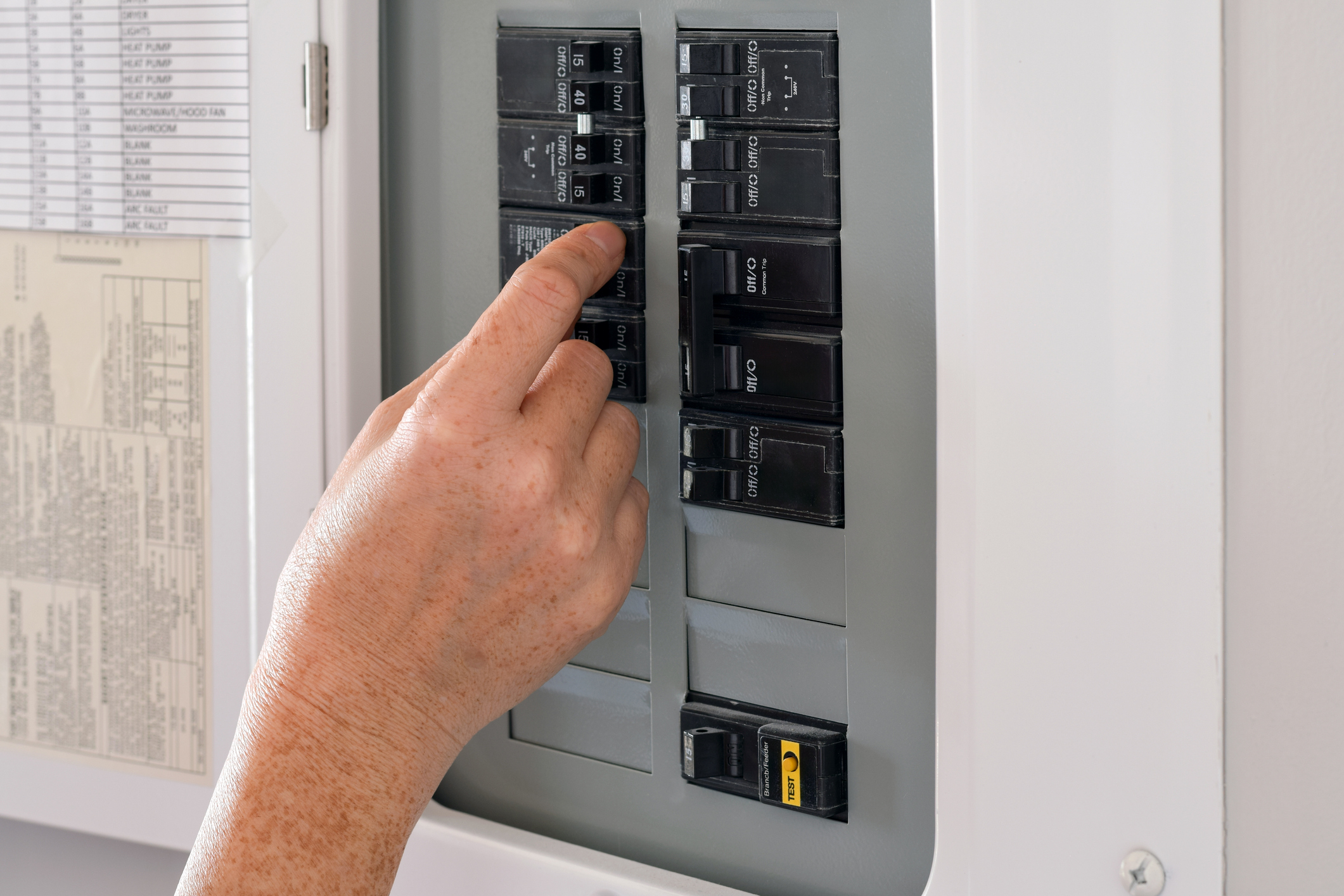
A fall home electrical safety check protects your house before space heaters and holiday lighting arrive. Shorter days push your electrical system harder than usual. Therefore, the three priorities are panel capacity, GFCI testing, and extension cord safety. Most homeowners can handle the basic checks themselves in under an hour. However, any sign of an overloaded panel or a failed GFCI test calls for a licensed electrician. In addition, completing this work in September or October means better contractor availability. As a result, you have one less worry once the snow flies.
What a Fall Home Electrical Safety Check Should Cover
A proper fall home electrical safety check has three parts. First, confirm your panel can handle the extra seasonal load. Second, test every GFCI outlet in the home. Third, review how extension cords get used as more activity moves indoors. In addition, each area matters more between September and December. For example, space heaters, slow cookers, and holiday lights all compete for the same circuits during those months.
This is not a full electrical inspection. Instead, it is a homeowner-level review that flags problems early. Otherwise, small issues can turn into a tripped breaker or a fire hazard behind the wall. Therefore, if anything below points to a deeper issue, call a Licensed Electrical Contractor rather than troubleshooting further on your own.
Panel Capacity: The Foundation of Every Fall Home Electrical Safety Check
Panel capacity is where most fall electrical problems start. Many Canadian homes were wired decades ago. In fact, most were wired long before space heaters and elaborate holiday light displays became standard. As a result, a 100-amp panel that comfortably handled a 1990s household can struggle once several high-draw seasonal appliances join the circuit. If your panel has never been assessed, our guide to home electrical upgrades worth doing walks through typical costs and priorities, including panel and breaker upgrades.
How to Tell If Your Panel Is Near Capacity
Open your panel door and check the labeling first. If circuits are unlabeled, or you do not know what half of them power, have the panel assessed. In addition, frequent breaker trips, warm switch plates, and a faint burning smell near the panel are warning signs. Never ignore them. Instead, call a licensed electrician, who can measure your actual load against the panel’s rated capacity. This remains the only reliable way to know how much headroom is left.
Signs of an Overloaded Circuit
Flickering lights when a heater kicks on, breakers that trip during normal use, and outlets that feel warm to the touch are the most common warning signs of an overloaded circuit. For example, these symptoms often appear first in fall, right as space heaters and extra lighting join circuits that already run close to their limit. According to the Electrical Safety Authority, plugging space heaters directly into a wall outlet, rather than an extension cord, is one of the simplest ways to prevent this problem.
Get Matched with a Baeumler Approved Electrician
GFCI Testing: A Core Step in Your Fall Home Electrical Safety Check
Ground fault circuit interrupters, or GFCIs, are the outlets with small “test” and “reset” buttons. You will find them in kitchens, bathrooms, garages, and most exterior locations. They cut power almost instantly when they detect a leak in current. As a result, they prevent the kind of shock that can occur when electricity meets moisture. Testing them is one of the fastest parts of a fall home electrical safety check. In fact, a full house takes only a few minutes.
How to Test a GFCI Outlet in Under a Minute
- Plug a lamp into the outlet and turn it on.
- Press “test.” The power should cut immediately.
- Press “reset” and confirm the power returns.
- If the outlet does not shut off, or will not reset properly, replace it.
Additionally, Ontario requires GFCI protection for any outlet within 1.5 metres of a sink. Therefore, use this moment to confirm no wet-area outlet has been missed.
A fall home electrical safety check should include every GFCI in the house, not just the kitchen and bathroom units. Garages, unfinished basements, and outdoor receptacles are the locations homeowners forget most often. However, these are exactly the outlets most likely to power a shop heater or holiday lighting once the weather turns.
Extension Cord Safety as More Time Moves Indoors
As families spend more time indoors through fall and the holiday season, extension cords quietly multiply. However, an extension cord is meant to be a temporary solution, not a permanent fix for too few outlets. Always plug space heaters directly into a wall outlet, never into an extension cord or power strip. In fact, these appliances draw enough current to overheat a cord that was never rated for that load. The ESA’s holiday safety guidance covers similar rules for string lights and outdoor decorations.
Common Extension Cord Mistakes
- Running cords under rugs, where heat cannot escape
- Daisy-chaining power bars together
- Using indoor-rated cords outdoors for holiday lighting
- Leaving frayed or damaged cords in service
Therefore, a quick walk-through of every room with a cord in use is worth the ten minutes it takes. Replace or address any cord that feels warm, any plug that fits loosely, or any burning smell near an outlet right away.
Common Mistakes to Avoid During a Fall Home Electrical Safety Check
Homeowners tend to repeat the same handful of mistakes each fall. For instance, ignoring a breaker that trips “only sometimes” is one of the most common, since intermittent trips are often an early warning rather than a fluke. Similarly, overloading a single outlet with a power bar carrying a space heater, a lamp, and holiday decorations is another. In addition, skipping the GFCI test button because the outlet “seems fine” ranks third. However, it is the easiest mistake to fix, taking under a minute per outlet.
Attempting panel work without a license is a serious mistake. In most Canadian provinces, it is also an illegal one. Beyond the safety risk, unpermitted electrical work can void a home insurance claim later. Our guide on DIY renovation risks covers why this applies well beyond electrical work, though electrical carries the most severe consequences.
Cost Considerations for Fall Electrical Safety Work
A basic GFCI outlet replacement typically runs $150 to $250 installed in most Canadian markets, including the outlet and labour. Similarly, a full panel assessment from a Licensed Electrical Contractor generally costs $150 to $350, depending on the region and panel complexity. If a panel upgrade turns out to be necessary, budget $2,000 to $4,000 or more for a full service upgrade. However, costs vary by province and by the complexity of the existing wiring.
These figures are starting points, not fixed quotes. Since most panel work also requires a permit, our home renovation permits guide explains the process by province. For that reason, a fall home electrical safety check is worth doing before a cold snap hits, when contractor schedules fill up quickly.
Explore Vetted Electrical Professionals Near You
How to Choose the Right Contractor for a Fall Home Electrical Safety Check
In most Canadian provinces, only a Licensed Electrical Contractor may legally perform electrical work in a home. Hiring a general handyman for electrical work, even something that seems minor, is risky. In fact, it is often against the law. Therefore, Ontario homeowners should confirm any electrician carries a valid ECRA/ESA licence number before work begins.
Questions to Ask Before Hiring an Electrician
Ask to see the electrician’s licence and insurance documentation directly. For more detail on verifying these, see our guide on how to check your electrician’s credentials. In addition, confirm whether a permit is required for the specific work discussed, since most panel-related work in Canada requires one. Ask how long the company has operated under its current name. Finally, request two recent references from similar jobs.
Red Flags to Watch For
Be cautious of any electrician who cannot produce a licence number on request. Similarly, watch for a price that seems unusually low for the scope described. The same goes for any suggestion to skip a permit to save time. A legitimate Licensed Electrical Contractor has no reason to avoid documentation. Therefore, skipping a permit on panel work is one of the fastest ways to void a home insurance policy.
Why Contractor Vetting Matters for Electrical Safety
Fire risk, shock risk, and voided insurance coverage are not abstract concerns. In fact, they are documented outcomes of unlicensed or careless electrical work across Canada every year. Therefore, vetting a contractor before hiring is not extra caution. Instead, it is the baseline standard for any work touching a home’s electrical panel or wiring.
This is also why a fall home electrical safety check should never turn into a DIY panel project. Testing a GFCI button or checking a cord for damage is safe for any homeowner. However, opening a panel cover and working inside it is not, no matter how confident a homeowner feels after watching an online tutorial.
The Baeumler Approved Difference
Every electrician in the Baeumler Approved network gets vetted for licensing, insurance, and a track record of quality work before joining the directory. As a result, a homeowner searching for help with a fall home electrical safety check is not starting from a blank search result full of unknowns. Good People. Good Work. is the standard every member is held to. Therefore, it applies just as much to a single GFCI replacement as it does to a full panel upgrade.
Find a Baeumler Approved Contractor
Frequently Asked Questions
How often should I do a fall home electrical safety check?
Once a year, ideally in September or early October, before space heaters and holiday lighting increase demand on your system. However, homes over 25 years old, or homes with a history of tripped breakers, should check twice a year.
Can I test my own GFCI outlets, or do I need an electrician?
Homeowners can safely test their own GFCI outlets using the built-in test and reset buttons. However, if an outlet fails to trip or will not reset, a licensed electrician needs to replace it rather than repair it as a DIY project.
Is it safe to plug a space heater into an extension cord?
No. Space heaters draw enough current to overheat most extension cords and power strips. Instead, always plug them directly into a wall outlet, ideally one not shared with another high-draw device.
How do I know if my electrical panel needs an upgrade?
Watch for frequent breaker trips, warm switch plates near the panel, flickering lights when appliances start, or a panel rated below 100 amps. Any of these signals that a panel assessment is worthwhile.
What is the difference between a GFCI and an AFCI?
A GFCI protects against shock by cutting power when it detects a current leak, typically in kitchens and bathrooms. In contrast, an AFCI protects against fire by detecting dangerous arcing, usually at the panel or as a receptacle in living areas.
Do I need a permit for electrical panel work in Canada?
Yes. In most Canadian provinces, any work involving the electrical panel requires a permit. In addition, a Licensed Electrical Contractor must perform or supervise that work. Otherwise, unpermitted panel work can void a home insurance policy.