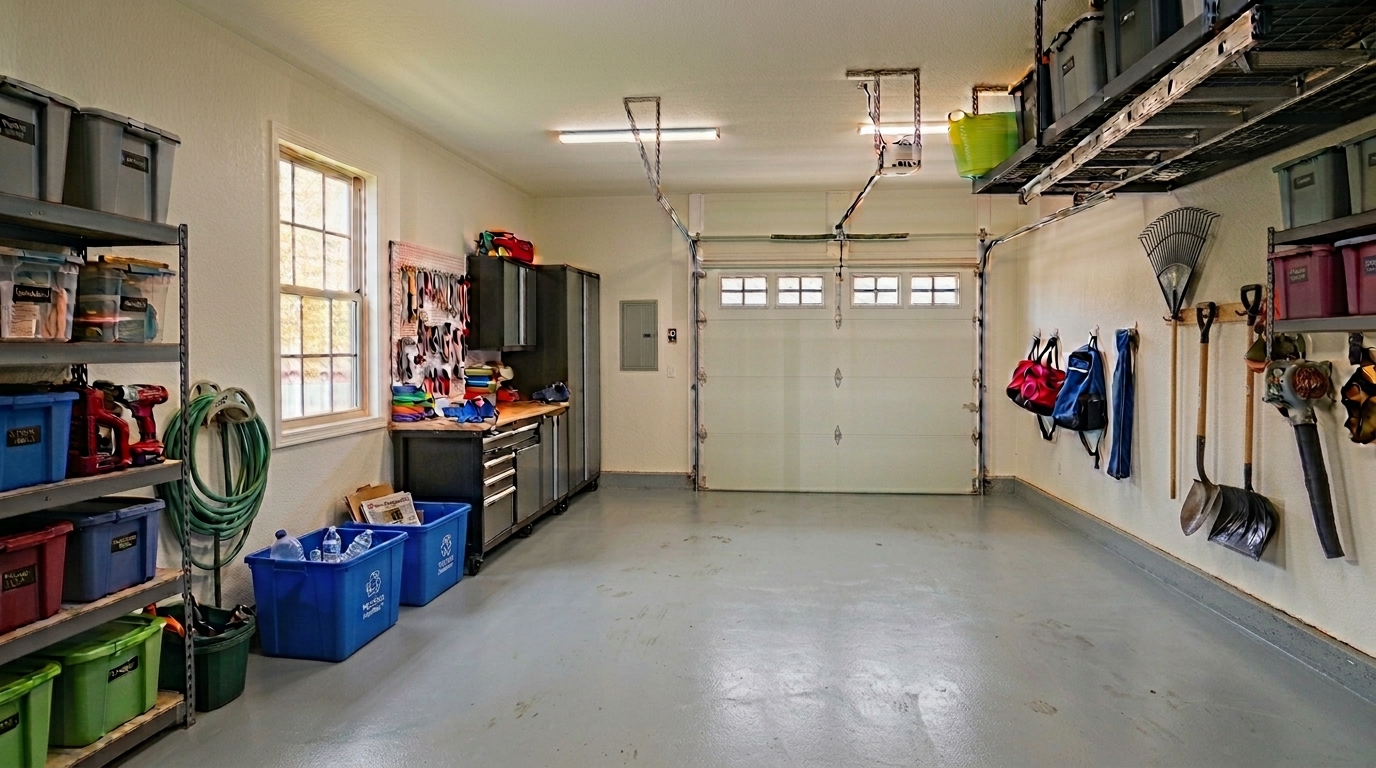
This fall garage organization guide covers three priorities every Canadian homeowner should tackle before winter: swapping seasonal gear, storing paint and chemicals safely, and winterizing tools and equipment. Garages take on extra strain once temperatures drop, since freezing temperatures can ruin paint, crack plastic bins, and damage untreated tools. As a result, a weekend spent on fall garage organization now prevents costly replacements and safety hazards once the snow arrives. This guide walks through what to prioritize, what it costs, and when to bring in a professional.
Quick Answer: What This Fall Garage Organization Guide Covers
A proper fall garage organization guide addresses three seasonal tasks together, because they tend to overlap in most Canadian garages. First, homeowners rotate summer gear out and winter gear in, which frees floor space and reduces tripping hazards. Second, they relocate temperature-sensitive paint and chemicals to a stable indoor location before the first hard freeze. Third, they clean, dry, and store tools correctly, so rust and cracked handles do not shorten their lifespan. Most homeowners can complete these tasks in a weekend, though structural upgrades like built-in shelving or insulation may call for a licensed contractor.
What Homeowners Need to Know Before Fall Garage Organization Begins
An unheated Canadian garage swings from summer heat to well below freezing within a few months. As a result, anything left inside needs to tolerate that range, or it needs a new home. This fall garage organization guide starts with an honest inventory. Walk the garage and sort everything into three piles: keep in the garage year-round, move indoors for winter, and donate or discard.
Timing matters as much as sorting. Early to mid-October is the ideal window for most of Canada, since it gives homeowners time to finish before the first hard frost without rushing through chemical and tool storage. In addition, this fall garage organization project pairs naturally with other seasonal work. Our guide to fall exterior home prep covers the roof, siding, and drainage tasks that typically happen the same weekend.
The Seasonal Gear Swap
Every fall garage organization guide should start here, since the gear swap creates the space needed for everything else.
- Move summer items like patio cushions, garden hoses, and lawn furniture to a back shelf or attic, once fully dry.
- Bring winter gear forward and within easy reach, for example snow shovels, ice melt, roof rakes, and winter tires.
- Store bicycles and sports equipment on wall-mounted racks rather than the floor, since this frees space and prevents rust from ground moisture.
- Label bins clearly by season, so next year’s swap takes less time.
Therefore, a garage that gets reorganized twice a year, rather than left to accumulate clutter, stays safer and more functional through every season.
Safe Storage for Paint, Chemicals, and Flammables
This is the section of any fall garage organization guide homeowners tend to skip, yet it matters most for safety. Unheated garages are one of the worst places to leave water-based paint, since it can freeze, separate, and become unusable below roughly 0 degrees Celsius. Therefore, if paint matters enough to keep, move it indoors to a dry, temperature-stable closet or storage room instead.
Flammable products, however, need a different approach entirely. According to Health Canada, products like solvents, gasoline, and varnishes that release harmful fumes or catch fire should ideally be stored outside the home, in a well-ventilated area away from heat and ignition sources. The Canadian Centre for Occupational Health and Safety similarly recommends labelling flammable and combustible materials clearly and storing them away from any heat source, which applies just as well to a home garage as it does to a commercial one.
Practical fall garage organization steps for chemical storage include the following.
- Keep flammables in their original, labelled containers on a shelf, never directly on a concrete floor.
- Store chemicals away from any heat source, including a furnace, water heater, or space heater.
- Lock cabinets containing chemicals if children or pets have access to the garage.
- Dispose of old or unidentified containers through a municipal household hazardous waste program rather than the trash.
Winterizing Tools and Equipment
Winterizing tools is the third pillar of this fall garage organization guide, and it protects the equipment homeowners rely on every year. First, clean dirt and sap from hand tools before storing them, then apply a light coat of oil to metal surfaces to prevent rust over the winter. In addition, drain gas from lawnmowers and other small engines, or add a fuel stabilizer if the equipment will sit for several months.
Power tool batteries also need attention. Lithium-ion batteries lose charge and can degrade if left in an unheated garage through a Canadian winter. Therefore, bringing them indoors extends their working life significantly. In addition, garages with exposed plumbing, such as a utility sink or a water line for a hose bib, need the same freeze protection as the rest of the house. Our guide on how to winterize your home’s plumbing covers insulating pipes that run through an uninsulated garage ceiling, which is a common trouble spot.
Common Mistakes to Avoid During Fall Garage Organization
Even organized homeowners fall into a few predictable traps during fall garage organization.
- Leaving paint in the garage over winter. A single hard freeze can permanently ruin water-based paint.
- Stacking flammable containers near the furnace or water heater. Heat sources and flammable vapours are a dangerous combination.
- Skipping the floor-level inventory. Boxes left on a damp concrete floor absorb moisture and attract pests.
- Forgetting battery-powered tools. Cold temperatures shorten battery lifespan considerably if they stay in the garage all winter.
- Waiting until the first snowfall. A rushed cleanup in freezing temperatures is far less thorough than one done in October.
Cost Considerations for Fall Garage Organization
Costs for a fall garage organization project vary widely depending on scope. However, homeowners handling their own sorting, labelling, and basic shelving typically spend very little beyond bin and shelving purchases.
- Wall-mounted shelving and hooks: $100 to $500 for a standard two-car garage, depending on materials.
- Freestanding shelving units: $150 to $400 per unit for heavy-duty steel or resin models.
- Flammable storage cabinet: $150 to $600, recommended for households storing larger quantities of paint or chemicals.
- Professional insulation or drywall upgrades: $1,500 to $5,000 or more, if the garage needs better temperature control for year-round storage.
- Custom built-in storage systems: $2,000 to $8,000, installed by a contractor.
For homeowners planning a broader seasonal schedule, our 2026 home maintenance checklist for Canadian homeowners shows how garage tasks fit into the full year.
How to Choose the Right Contractor for Garage Storage Upgrades
Most fall garage organization tasks are DIY-friendly. However, larger projects, such as built-in cabinetry, insulation, or an epoxy floor coating, call for a professional. Use these criteria when hiring for garage storage work.
- Confirm licensing and insurance before any deposit changes hands.
- Ask for photos or references from recent garage storage or shelving installations.
- Get a written quote that specifies materials, labour, and timeline.
- Confirm whether the project requires a permit, particularly if it involves electrical outlets or structural changes.
If your plans go beyond storage entirely, such as converting the space into a livable room, our guide on renovating a garage into an apartment outlines the additional considerations involved.
Questions to Ask Before Hiring
- Are you licensed and insured to work in this province?
- Can you provide references from similar garage storage or organization projects?
- What is included in the quoted price, and what counts as an add-on?
- Will you handle permits if the project requires them?
- What is your estimated timeline for completion?
Red Flags
- A contractor who will not confirm insurance or licensing in writing.
- Pressure to pay the full amount before work begins.
- A quote that is significantly lower than every other estimate you received.
- No fixed business address or verifiable history.
- A verbal-only agreement with nothing in writing.
Why Contractor Vetting Matters
Garage projects that go beyond a standard fall garage organization guide, such as electrical work, insulation, or structural changes, carry higher stakes than a simple shelving installation. For example, a poorly wired outlet or improperly installed insulation can create a fire risk that stays hidden for months. Therefore, vetting a contractor before hiring protects both your home and your family, especially for any project that goes beyond basic organization.
The Baeumler Approved Difference
Every contractor in the Baeumler Approved network is vetted for licensing, insurance, and a track record of completed work. Therefore, whether a homeowner needs a simple consultation on shelving or a full garage renovation, working with a Baeumler Approved member means the same standard applies every time. Bryan Baeumler built the network around one idea: homeowners deserve contractors they can trust without having to do all the research themselves.
Find a Baeumler Approved Contractor
Frequently Asked Questions
When should I start fall garage organization?
Early to mid-October works well for most of Canada. As a result, homeowners have time to finish sorting, storing, and winterizing before the first hard frost.
Does fall garage organization include storing paint safely over winter?
Yes, storing paint safely is a core part of any fall garage organization guide. Water-based paint generally should not stay in an unheated garage over winter, since freezing temperatures can ruin the texture and performance permanently. Therefore, move it to a dry, temperature-stable space indoors instead.
How do I store gasoline and other flammable liquids safely?
Keep flammable liquids in their original, labelled containers, away from heat sources and ignition points. In addition, store them in a location separate from living spaces, following the guidance from Health Canada and local fire code requirements, since these standards exist to prevent fires.
Do garage battery-powered tools need special winter storage?
Yes. Lithium-ion batteries lose charge and can degrade faster in cold, unheated garages. Therefore, bringing them indoors during the winter months helps preserve their lifespan.
Is a permit required for garage organization or storage upgrades?
Basic shelving and organization typically do not require a permit. However, structural changes, added electrical outlets, or insulation upgrades often do, depending on the municipality where the home is located.
How much does professional garage organization typically cost?
Costs range from under $200 for basic DIY shelving to several thousand dollars for custom built-in systems or insulation upgrades, since scope and materials vary significantly.